
For many of us, housing is the biggest monthly expense in retirement. If you’re thinking about moving to a smaller home, one question quickly comes up: is it cheaper to rent or buy? I don’t think there’s one answer for everyone. The right choice depends on your local housing costs, how long you plan to stay, how much cash you want tied up in a home, and how much responsibility you want.
Is It Cheaper to Rent or Buy When You Downsize?
When I look at downsizing, I start with the full monthly cost, not just the rent or mortgage. Is it cheaper to rent or buy after you move to a smaller place? Compare the payment, taxes, insurance, fees, repairs, utilities, and moving costs. A smaller home can lower expenses, but only if the new total really fits your retirement budget.
Table of Contents
• Downsizing and housing costs
• Renting or buying after retirement
• Rent vs. buy costs
• Flexibility and renting
• Comparing your local market
• Using home equity
• Downsizing changes the math
• Long-term housing costs
• Retirement budget test
• My bottom line
Renting or Buying After You Retire
Retirement changes the math because income may be more fixed. Is it cheaper to rent or buy when you’re living mostly on Social Security, a pension, or savings? I’d look at how predictable each choice feels. Our guide to living on less after 60 can help you build a simple monthly plan before making a housing change.
Rent vs. Buy Costs Go Beyond the Monthly Payment
A rent vs. buy comparison should include more than the advertised payment. Homeownership can give you stability, but the mortgage isn’t the whole bill. The Consumer Financial Protection Bureau reminds buyers to consider property taxes, homeowners insurance, possible mortgage insurance, association fees, and maintenance. I’d also keep a repair fund because roofs, plumbing, and appliances don’t wait for a convenient month.
Buying vs. Renting: Flexibility Matters
Buying vs. renting isn’t only about the monthly price. When I ask is it cheaper to rent or buy, I also ask how much flexibility I want. Renting may make sense if you want fewer maintenance worries or expect another move. A smaller rental can also make it easier to test a new city before buying. If relocation is part of your plan, our retirement costs by state guide shows how much location can change an overall retirement budget.
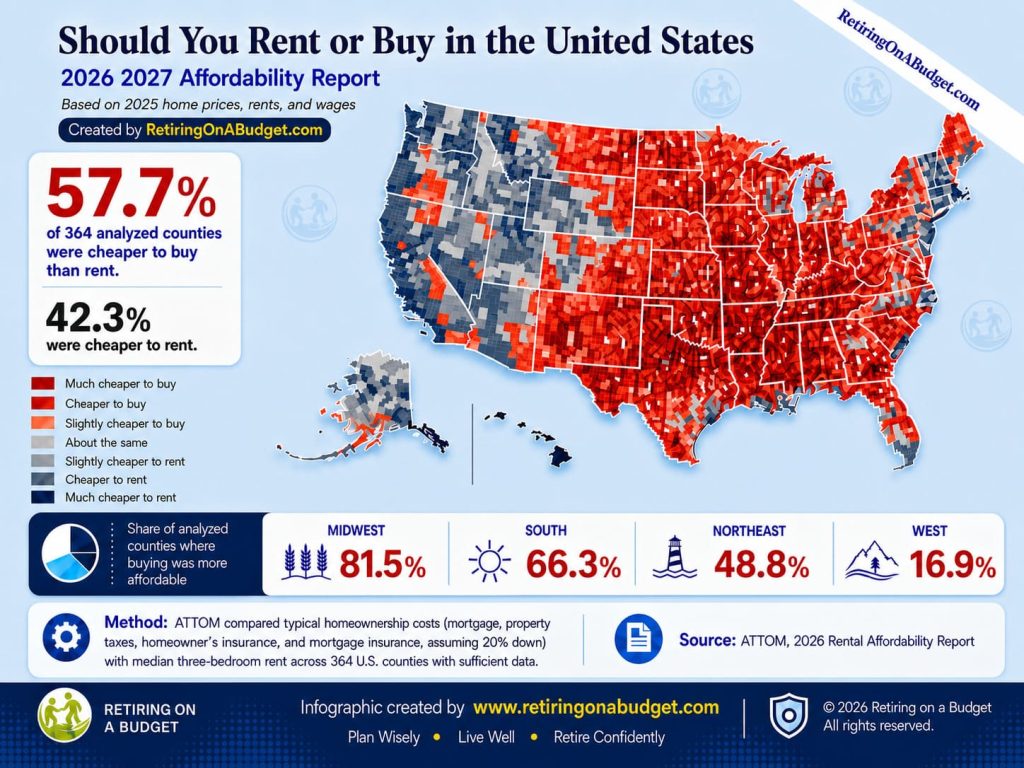
Is It Cheaper to Rent or Buy in Your Area?
National averages are useful, but housing is local. Is it cheaper to rent or buy where you actually want to live? Compare real rental listings with homes you would truly consider buying, then add the ownership costs that are easy to miss. If you’re unsure where to start, our Senior Resource Guide includes housing and assistance resources for older adults.
Is It Cheaper to Rent or Buy If You Own Your Home?
This can be a very different question if your current home is paid off or has a lot of equity. Is it cheaper to rent or buy after selling it? Selling may free up cash, but buying another home can tie some of that money right back up. I’d compare what you would clear after selling with the cash needed for your next home, moving costs, and your desired emergency savings.
Rent or Buy Decisions Change When You Downsize
A rent or buy decision can change when you downsize. A smaller place may reduce utility bills, upkeep, yard work, property taxes, and the time you spend caring for a house. Before I’d make a move, I’d run the new numbers through a broader retirement plan. Our retirement calculator can help you compare income needs, savings, and the amount your nest egg may need to support.
Is It Cheaper to Rent or Buy for the Long Term?
Time matters. Is it cheaper to rent or buy if you expect to stay for many years? Buying has upfront and selling costs, while renting can rise over time and doesn’t build home equity. The longer you stay, the more important it becomes to compare the long-term picture instead of one month’s payment. I’d also think about health, stairs, transportation, and whether the home can still work for you later.
Renting vs. Owning: Use Your Retirement Budget
Renting vs. owning should fit your whole retirement budget. When I ask is it cheaper to rent or buy, I compare the answer with the rest of my monthly plan. I don’t like blanket rules such as “renting wastes money” or “buying is always better.” Your numbers matter more. Before you decide, write down the cash you have available, the monthly housing cost, expected repairs, insurance, taxes, and what you want left for travel, health care, and everyday life. Our 100 Ways to Save in Retirement can help you look for savings in other parts of the budget too.
Is It Cheaper to Rent or Buy? My Bottom Line
So, is it cheaper to rent or buy? For a senior who is downsizing, I’d choose the option that gives the best mix of affordability, flexibility, safety, and peace of mind. If a move involves selling or buying, our Senior Certified Agent Directory may help you find a professional who works with older adults. You can also use a HUD-certified housing counselor for independent housing guidance. The goal isn’t just a cheaper home. It’s a housing choice that supports the retirement you want.